Author: anurastogi006@gmail.com

People-Pleasing Isn’t “Being Nice”: Signs You’re Abandoning Yourself.

Book cover for "Are You Mad at Me?: For People Pleasers, Perfectionists, and the Rest of Us" by Meg Josephson, LCSW. Orange background with white text, subtitle on stopping people-pleasing and living for yourself. Endorsed by Adam Grant. Quote from John Callahan. Relates to people-pleasing signs and self-care
Struggling with people-pleasing signs? This book nails it: Stop abandoning yourself and live for YOU.

Ever say yes to covering your coworker’s shift, even when you’re wiped out? Or bite your tongue when your friend picks the movie you hate—again? We call it “being nice,” but deep down, it feels off. People-pleasing isn’t kindness; it’s quietly giving up your own needs to keep others happy. It sneaks into your daily life, leaving you drained and resentful.

If this hits home, you’re not alone. Psychologists say it’s a habit rooted in fear of rejection. A 2023 study in Personality and Social Psychology Bulletin links it to higher stress and low self-worth. This article breaks down people-pleasing signs in real daily moments, why it hurts, and simple steps to stop abandoning yourself. Let’s spot it and fix it.

Why We Do It: The Daily Traps

You start small. Mom calls: “Can you run errands after work?” Boss asks for “one more task.” Friends want drinks when you crave bed. Saying no feels mean, so you cave.

But here’s the truth: People-pleasing skips your voice. It comes from kid stuff—like praise for “good girls/boys”—or past hurts. Harvard Health notes it raises anxiety and burnout risk. In daily life, it looks like this:

  • Skipping lunch to help a neighbor.
  • Agreeing to plans that drain your weekend.
  • Apologizing when you’re not wrong.

Sound familiar? It’s not nice—it’s self-abandonment.

7 Everyday Signs You’re a People-Pleaser (And Ditching Yourself)

Check these real-life flags. If 3+ ring true, it’s time to pause.

  1. You Say Yes When You Mean No
    Daily example: Colleague dumps their report on you Friday night. “Sure!” you say, even with family dinner. Inside, you’re screaming. This kills your plans and builds quiet anger.
  2. You Avoid Fights at All Costs
    Partner wants takeout again? You nod, hiding your cook craving. A study in Journal of Personality shows this bottles resentment, exploding later.
  3. Your Needs Stay on the Back Burner
    Friends pick the bar; you hate crowds but go. Result? Exhausted Sunday recovery. You’re last on your own list.
  4. Guilt Hits Hard When You Speak Up
    Telling your roommate “Please do dishes” feels rude. So you do them. Guilt = people-pleasing fuel, per Psychology Today.
  5. You Apologize for Breathing
    Late to coffee because traffic? “Sorry!” first words. Even if it’s not your fault. This shrinks your space.
  6. Burnout is Your Normal
    Extra shifts, endless texts, no “me time.” Mayo Clinic ties it to chronic fatigue—your body screams what your mouth won’t.
  7. Relationships Feel One-Sided
    You give advice, favors, time. They take, rarely give back. Daily drain.

These aren’t “nice”—they’re signs you’re abandoning yourself for likes.

The Real Cost: How It Messes Your Daily Life

Think it’s harmless? Nope. People-pleasing effects on mental health stack up fast.

  • Stress Overload: Constant yeses spike cortisol. A 2022 meta-analysis links it to anxiety disorders.
  • Lost Identity: What do you want for dinner? Hard to know after years of others’ picks.
  • Weak Bonds: True friends want the real you, not a yes-bot. Fakers fade anyway.
  • Health Hits: Poor sleep, skipped meals = weight gain, low mood. Daily grind turns grind-y.

I know a friend—Sarah—who people-pleased her way to a breakdown. Always the “yes girl” at work, she missed her kid’s games. Quit job, therapy, now thriving. Your story?

How to Stop: Daily Steps to Choose Yourself

Good news: You can quit without turning mean. Psych-backed tips for real life.

Step 1: Spot the Pattern

Journal 3 days: “What did I say yes to? How did I feel?” Awareness = power. Apps like Day One help.

Step 2: Practice “No” Like a Muscle

Start tiny: “Can’t do lunch today.” Or “Let’s pick a quiet spot.” Cognitive Behavioral Therapy builds this—no guilt.

Script for Daily Wins:

  • Friend invite: “Sounds fun, but I’m beat—rain check?”
  • Work ask: “Overloaded now; next week?”
  • Family: “Love helping, but need tonight off.”

Step 3: Fill Your Cup First

Block “me time” like appointments. 30-min walk, hobby, nap. Say: “Priorities first.”

Step 4: Build Real Boundaries

Share needs: “I need quiet evenings.” True pals respect it. Losers? Let go.

Step 5: Seek Backup

Therapy apps like BetterHelp unpack roots. Books: The Disease to Please by Harriet Braiker.

Quick Daily Challenge:

Time Action Why It Helps
Morning One “me” plan (coffee alone) Starts day strong
Afternoon Pause before yes (count to 5) Checks real wants
Evening No screens post-9 PM Recharge mode

Consistency flips the script in weeks.

What Happens When You Stop Abandoning Yourself

Freedom feels wild. Energy up, resentment gone, real connections bloom. People respect the “new you.” A 2024 study in Journal of Happiness Studies shows boundary-setters report 28% higher life satisfaction.

You’re not selfish—you’re whole. Daily life gets lighter: Work yeses drop, fun plans rise, guilt fades.

Your Turn: Pick One Sign, Make One Change

People-pleasing isn’t “being nice”—it’s a slow self-sabotage. Spot the signs in your day, choose you. What’s one yes you’ll turn to no this week? Share below—we’re in this.

Do read a book ”Are You Mad at Me?” ,

https://share.google/VtBJl1FrDVBgWkyLD

In which the author Josephson explodes the idea that people-pleasing is a personality trait. Instead, she illuminates how it’s actually a common trauma response (also known as “fawning”): an instinct often learned in childhood to become more appealing to a perceived threat in order to feel safe.


 

Stop Bullying Awareness – The Emotional Impact of Bullying on Young People
Text reading “People pleasing is dishonest” over a person standing among tropical plants, symbolizing self-reflection, authenticity, and the importance of setting personal boundaries.

Categories: Uncategorized

Silent Psychology : Why People Pull Away Without Saying Anything

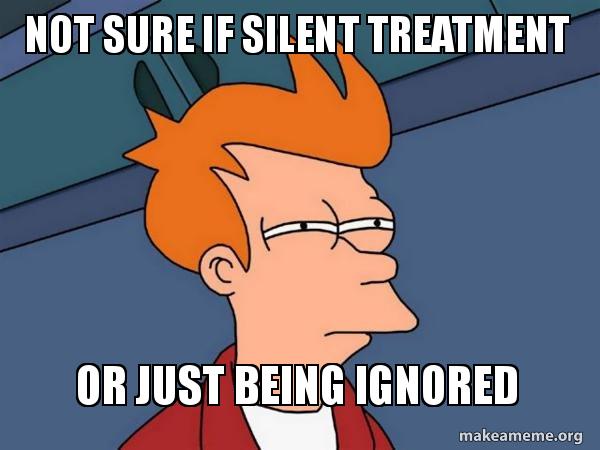
SILENT TREATMENT
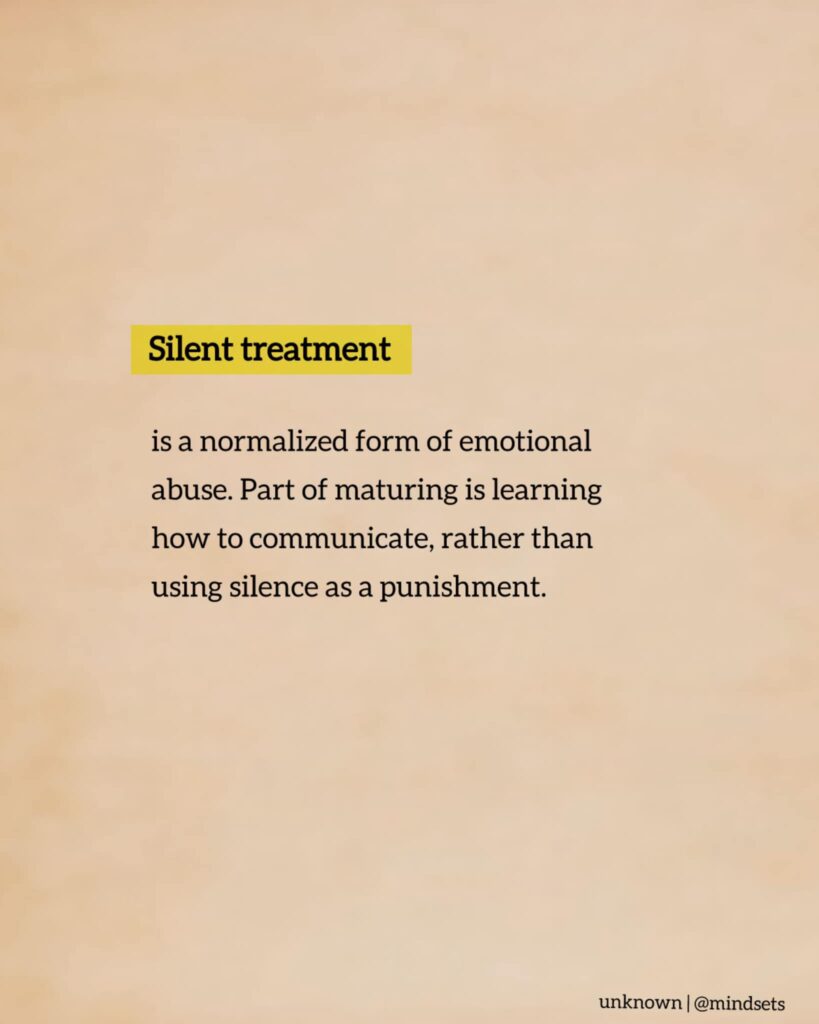
Silent treatment


 Silent Psychology : 7 powerful Reasons Why People Pull Away Without Saying Anything

Ever noticed someone silently becoming distant – less texting , avoiding phone calls , conversations or simply acting “off”- yet not giving you a single explaination?

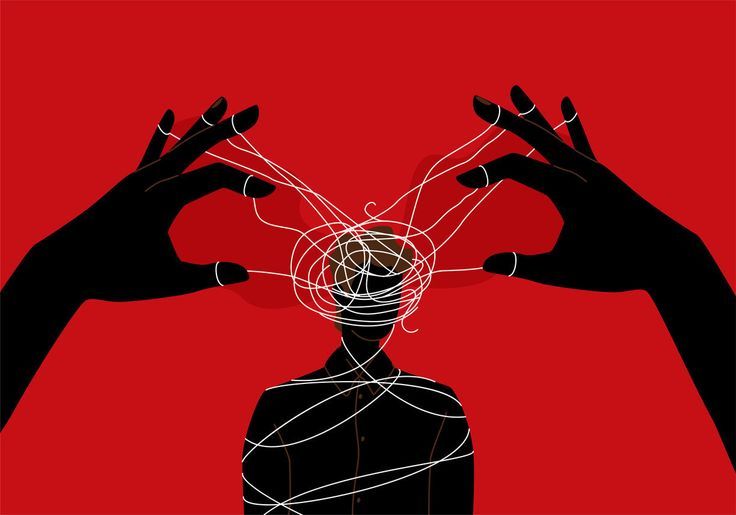
This silent shift isn’t random, its rooted in Silent Psychology, the complex emotional and cognitive processes that makes people withdraw quietly instead of communicating clearly or openly.

The pain of silent distancing can be worse than an argument because you don’t know what changed, what triggered it, or what you did wrong. But in reality, their silence often has more to do with them than with you.

Below is a deep dive into why people pull away without saying anything, what it means psychologically, and how you can respond in a healthy way.


1. Emotional Overload: When Feelings Become Too Much

Many people shut down emotionally when things feel too overwhelming. Instead of expressing feelings, they withdraw to regain control.

Why this happens

  • They fear saying the wrong thing.

  • They’re scared their emotions will explode.

  • They don’t know how to express what they feel.

  • They need silence to process.

Silent Psychology Insight

For emotionally sensitive or anxious individuals, silence becomes a defense mechanism. They pull back because talking about it feels even harder.


2. Avoidant Attachment Style: Intimacy Feels Threatening

If someone has an avoidant attachment style, they withdraw the moment a relationship starts feeling too close or emotionally heavy.

Signs of avoidant withdrawal

  • They become colder when you get closer.

  • They reduce affection.

  • They avoid deep conversations.

  • They suddenly “need space.”

Silent Psychology Insight

To an avoidant person, silence = protection.
They distance themselves to avoid vulnerability, not because they’ve stopped caring.


3. Fear of Conflict: Silence Feels Safer Than Confrontation

Some people absolutely hate arguments. They fear:

  • hurting your feelings

  • being misunderstood

  • creating drama

  • emotional escalation

So instead of addressing the issue, they choose silent distancing.

Silent Psychology Insight

Their silence is their way of preserving peace—even if it creates more confusion.


4. Internal Battles: They’re Struggling With Something You Don’t Know About

Not all withdrawal is related to you.
People pull away when they are dealing with:

  • anxiety

  • overthinking

  • family issues

  • depression

  • burnout

  • financial stress

  • insecurity

  • identity confusion

When their internal world feels chaotic, they create space from the outside world.

Silent Psychology Insight

Silence becomes a survival mode.
They’re trying to manage a storm you cannot see.


5. Loss of Emotional Interest (But They Don’t Want to Hurt You)

This is painful, but real.
Sometimes people distance themselves because:

  • the spark is fading

  • priorities are changing

  • they aren’t sure what they want

  • they can’t match your energy

But instead of saying it out loud, they let silence do the talking.

Silent Psychology Insight

People often avoid the truth because it feels cruel.
So they pull away—quietly hoping you’ll “get the hint” without a confrontation.


6. Guilt: They Know They Caused the Change

When someone feels guilty for disappointing you, hurting you, or doing something wrong…
they often disappear silently.

Common reasons

  • They know they lied.

  • They know they started losing interest.

  • They know they’re not giving you enough.

  • They know you deserve better.

Silent Psychology Insight

Guilt makes them avoid communication because they don’t want to face the consequences of their actions.


7. They Don’t Have the Emotional Vocabulary to Explain Themselves

Not everyone knows how to process emotions.
Not everyone has the language to express their fears, sadness, or confusion.

Examples

  • “I don’t know how to explain what I feel.”

  • “I don’t want to look weak.”

  • “I’m scared you’ll misunderstand.”

Silent Psychology Insight

For emotionally closed-off individuals, silence is easier than honesty.


🔍 The Deepest Reason: Silence Feels Controlled, Words Don’t

Talking requires:

  • clarity

  • courage

  • emotional maturity

  • honesty

  • vulnerability

Pulling away requires none of these.
That is why silent withdrawal is one of the most common psychological reactions in modern relationships.


💬 What Their Silence Actually Means (Psychologically)

When someone pulls away without saying anything, it rarely means:

  • they hate you

  • you did something wrong

  • they’re punishing you

It usually means:

  • they are overwhelmed

  • they don’t know how to talk

  • they’re scared of emotions

  • they don’t want conflict

  • they’re confused internally

  • they’re emotionally tired

Silent Psychology shows us that distance often reflects their battles, not your worth.


💛 How You Should Respond (The Healthy Way)

✔ 1. Give Them Gentle Space

Not punishment, not anger—just respectful space.
People open up faster when they don’t feel pressured.

✔ 2. Communicate Once, Calmly

A simple message like:
“I’ve noticed some distance. If you’re going through something, I’m here when you’re ready.”

Don’t over-text. Don’t chase.
Just express awareness and openness.

✔ 3. Don’t Jump to Worst-Case Scenarios

Your mind will overthink, but remind yourself:
Silence doesn’t always equal rejection.

✔ 4. Focus on Yourself

Keep your routine, hobbies, goals, and emotional balance.
Your world shouldn’t shrink because someone is pulling away.

✔ 5. If Silence Becomes a Pattern — Set Boundaries

You deserve communication.
If their withdrawal is constant, express what you need clearly.


🧩 When Silence Says More Than Words

Silent Psychology teaches us that silence is communication.
It is:

  • a coping mechanism

  • a protective shield

  • an emotional pause

  • a sign of overwhelm

  • an unspoken fear

Not all distance means disinterest.
Many times, it means someone is fighting a battle you can’t see.


📌 Final Thoughts: It’s Not Always Your Fault

People pull away for reasons rooted deeply in their psychology—not because you weren’t enough, not because you failed, but because they didn’t know how to stay connected while navigating their emotions.


Silence doesn’t mean you weren’t valued.
It often means they didn’t know how to communicate their chaos.

External Resources to Explore Silent Psychology Further

If you want to dive deeper into why people pull away without saying anything, here are some reliable psychology-based resources that explain emotional distancing, attachment patterns, and silent withdrawal in relationships:


  1. Verywell Mind – Avoidant Attachment in Relationships
    https://www.verywellmind.com/what-is-avoidant-attachment-in-relationships-8600201

  2. Psychology Today – Why People Pull Away in Relationships
    https://www.psychologytoday.com/us/blog/insecure-attachment/202001/why-people-pull-away

  3. Greater Good Science Center – Emotional Withdrawal & Relationship Science
    https://greatergood.berkeley.edu/article/item/why_we_pull_away_from_people_who_care_about_us

  4. Healthline – Emotional Detachment: What It Means & Why It Happens
    https://www.healthline.com/health/emotional-detachment

  5. Attachment Project – Understanding Attachment Styles & Withdrawals
    https://www.attachmentproject.com/blog

silent psychology

Categories: Uncategorized

Why You Think the Way You Do- Purpose of Psyche It Out.

Why You Think the Way You Do is more than just a psychological phrase — it’s the starting point of understanding your entire inner world. Everything you feel, say, react to, overthink, avoid, desire, or dream about can be traced back to one thing: the patterns your brain has been building for years.

PsychItOut was created to help you understand these patterns without the heavy, clinical vibe. Most people don’t realise how much of their identity is shaped by things they never consciously chose — habits, memories, survival instincts, emotional shortcuts, unspoken fears, and unhealed experiences. This blog exists to decode all of that in a way that feels real, simple, relatable, and very… GenZ.

Today’s world is overwhelming. We’re living in a time where information is everywhere, but self-awareness is still missing. We know everything about trends, celebrities, and aesthetics, yet almost nothing about the one thing we carry everywhere — our own mind.
This is where PsychItOut steps in.

Your thoughts don’t come out of nowhere. You’re not “just overthinking” or “acting sensitive” or “being dramatic.” Your mind is processing your world through layers of:

  • Past experiences
  • Hidden beliefs about yourself
  • Cognitive biases you don’t know you have
  • Emotional memory stored in your brain
  • Learned behaviours you picked up growing up
  • Social conditioning from school, friends, and family
  • Digital influences from reels, content, and trends
  • Your personality type and inner wiring

Every single thought passes through this psychological filter.

That’s why two people can live the same moment but feel completely different things.
Your brain is a storyteller — and the story it tells depends on your past, your fears, your insecurities, and your dreams.

PsychItOut breaks these invisible filters down.
Because understanding why you think the way you do is the first step to making your mind a better place to live in.

🌐 What PsychItOut Is Really About

PsychItOut is not a clinical psychology website.
It’s a non-medical, relatable psychology blog built for the modern, hyper-aware, emotionally-intelligent Gen Z generation that feels deeply, thinks too much, questions everything, and wants answers that are:

  • fast
  • real
  • aesthetic
  • and actually helpful

This space was created for people who want to understand themselves, not fix themselves.

Here’s what PsychItOut gives you:

  • Clear explanations about complex emotions
  • Daily-life psychology that feels relatable
  • Behavioural patterns decoded in simple language
  • Gen Z psychology insights that actually make sense
  • Overthinking patterns explained with logic
  • Self-awareness tools to help you understand your reactions
  • Real examples you can apply instantly
  • Insightful takes on boundaries, self-worth, attachment styles, and more

You get facts, theories, and emotional clarity — without the pressure of “self-improvement perfection.”

🧠 How PsychItOut Helps You Understand Why You Think the Way You Do

Instead of presenting psychology like a textbook, PsychItOut treats it like a mirror.

Here’s what happens when you read through this blog regularly:

✨ 1. You start recognising your own patterns

You understand why you get attached fast, why you shut down when overwhelmed, why you avoid certain conversations, why you replay situations in your head, and why specific people trigger specific emotions.

✨ 2. You finally see the emotional logic behind your reactions

Your emotions aren’t random — they’re signals.
They tell you what matters, what hurts, what scares you, and what heals you.

✨ 3. You stop blaming yourself for things you don’t understand yet

Instead of saying,
“Why am I like this?”
you begin asking,
“What is this trying to show me?”

That’s growth.

✨ 4. You build emotional intelligence without even realising it

Because when you understand your mind, you automatically start behaving, responding, and communicating differently.

✨ 5. You create a healthier relationship with your own thoughts

Thoughts are not enemies; thoughts are information.
And when you understand why you think the way you do, overthinking stops being a burden and becomes a message.

📍 Why PsychItOut Feels Different (And Addictively Relatable)

There are thousands of psychology pages, but PsychItOut sets itself apart because it’s built on real human experience, not just theoretical knowledge.

It’s GenZ-centric.

Because we’re the generation that feels everything a little too much.

It’s realistic.

No fancy words. No emotional pressure. No toxic positivity.

It’s modern and aesthetic.

Because mental clarity should feel pretty, calm, and organised.

It’s built for people who want depth but also simplicity.

You get profound insights, but delivered in a chill, conversational tone.

It makes psychology feel like a safe space.

Not a diagnosis.


Gen Z doesn’t function like previous generations.
We’re shaped by:

  • constant stimulation
  • fast-paced digital emotions
  • rapid dopamine cycles
  • information overload
  • high expectations
  • early exposure to emotional complexities
  • burnout culture
  • the pressure to look put-together all the time

No wonder our minds feel overstimulated, confused, sensitive, and exhausted.

PsychItOut breaks these patterns down so you can stop surviving your thoughts and start understanding them.

💬 Real-Life Examples That Explain Why You Think the Way You Do

Example 1: You feel ignored when someone takes too long to reply.

It’s not “neediness.”
It’s your brain associating delayed responses with emotional abandonment from past experiences.

Example 2: You overthink simple texts.

Your mind is trying to predict rejection before it happens so it can protect you.

Example 3: You avoid confrontation even when you’re right.

Your nervous system has learned that safety comes from silence, not expression.

Example 4: You get attached too quickly.

Your brain releases bonding hormones faster when it feels emotionally understood — something you may not have experienced consistently growing up.

These aren’t flaws.
These are psychological patterns.

💡 The True Purpose Behind PsychItOut

PsychItOut was created to be the place where you go when:

  • you can’t understand your own emotions
  • you want clarity
  • you want to feel seen without being judged
  • you want bite-sized psychology that actually fits your life
  • you want to deepen your self-awareness
  • you want to feel less alone in the way you think

This blog doesn’t just explore the mind —
it helps you build a healthy relationship with your own mind.

✨ Final Thought — Your Mind Isn’t Confusing; It’s Communicating

Everything you feel is valid.
Everything you think has meaning.
Everything you fear has a story.

Your mind is not chaotic — it’s coded.
And PsychItOut is the space where we gently decode that story, one pattern at a time.

Welcome to your safe corner of the internet —
a place built to explain why you think the way you do and help you understand the person you’ve been becoming all along.

decoding why you think the way you do

Add Your Heading Text Here

Categories: Uncategorized